Where Digital Risk Protection Fits in a Consolidated External Security Platform


What’s on this page
Buying external security capabilities one tool at a time often creates a fragmented operating model: one product for attack surface management, another for brand abuse, a separate threat intelligence feed and a questionnaire process for suppliers.
Each capability addresses a valid problem. The difficulty is that findings arrive in different formats, reach different teams and rarely share enough context to support a coordinated response.
A consolidated external security platform should solve more than the inconvenience of multiple dashboards. Its value comes from connecting assets, exposures, emerging threats and active attacks on a shared data foundation.
For security leaders evaluating this model, the practical question is what Digital Risk Protection contributes and what it gains from the surrounding capabilities.
What does Digital Risk Protection cover?
Digital Risk Protection (DRP) identifies threats targeting an organisation’s brand, executives, customers and data across infrastructure the organisation does not control.
This includes phishing websites, lookalike domains, fake social profiles, fraudulent advertisements, rogue mobile applications and exposed corporate credentials. The evidence may sit on a registrar, hosting provider, social network, app store, underground forum or malware log. The people at risk are often customers, employees and business partners.
Within CTM360, CyberBlindspot provides these DRP capabilities across the surface, deep and dark web.
How DRP connects with attack surface management
DRP needs a reliable baseline of legitimate assets before it can assess potential impersonation. A lookalike domain is easier to evaluate when the organisation has an accurate record of the domain, website or login experience being copied.
HackerView provides this baseline by using public data to discover internet-facing assets and map the organisation’s external digital presence. This helps distinguish legitimate infrastructure from suspicious or unauthorised activity.
The relationship also works in the other direction. DRP investigations may reveal domains or digital properties that resemble corporate assets but are not present in the recognised inventory. These findings should be reviewed before they are classified as malicious; some may be forgotten assets or systems created outside the usual IT process.
DeepScan adds validated exposure information to this context. An exposed login interface on a legitimate server is one risk. A newly registered lookalike domain imitating that interface is a separate warning. Viewed together, they can justify faster investigation and a more coordinated response.
A lookalike domain alone does not always prove malicious intent. The advantage of shared context is that the security team can assess similarity, infrastructure, content and exposure data together rather than treating each signal in isolation.
How DRP strengthens threat intelligence
Global threat intelligence explains which adversaries, campaigns and techniques matter across industries and regions. DRP shows whether that activity is becoming relevant to a specific organisation.
ThreatCover provides curated threat intelligence, including adversary activity and tactics, techniques and procedures. CyNA aggregates cyber news, threat-actor claims, advisories and vulnerability information from global sources.
This intelligence becomes more actionable when combined with organisation-specific DRP findings. A report that an actor is targeting a particular sector provides useful context. A simultaneous finding that corporate credentials associated with the organisation have appeared in a malware log creates a specific investigation and response requirement.
The value does not come from placing both findings on the same screen. It comes from connecting external developments to the organisation’s assets, identities and business exposure.
How DRP contributes to third-party risk
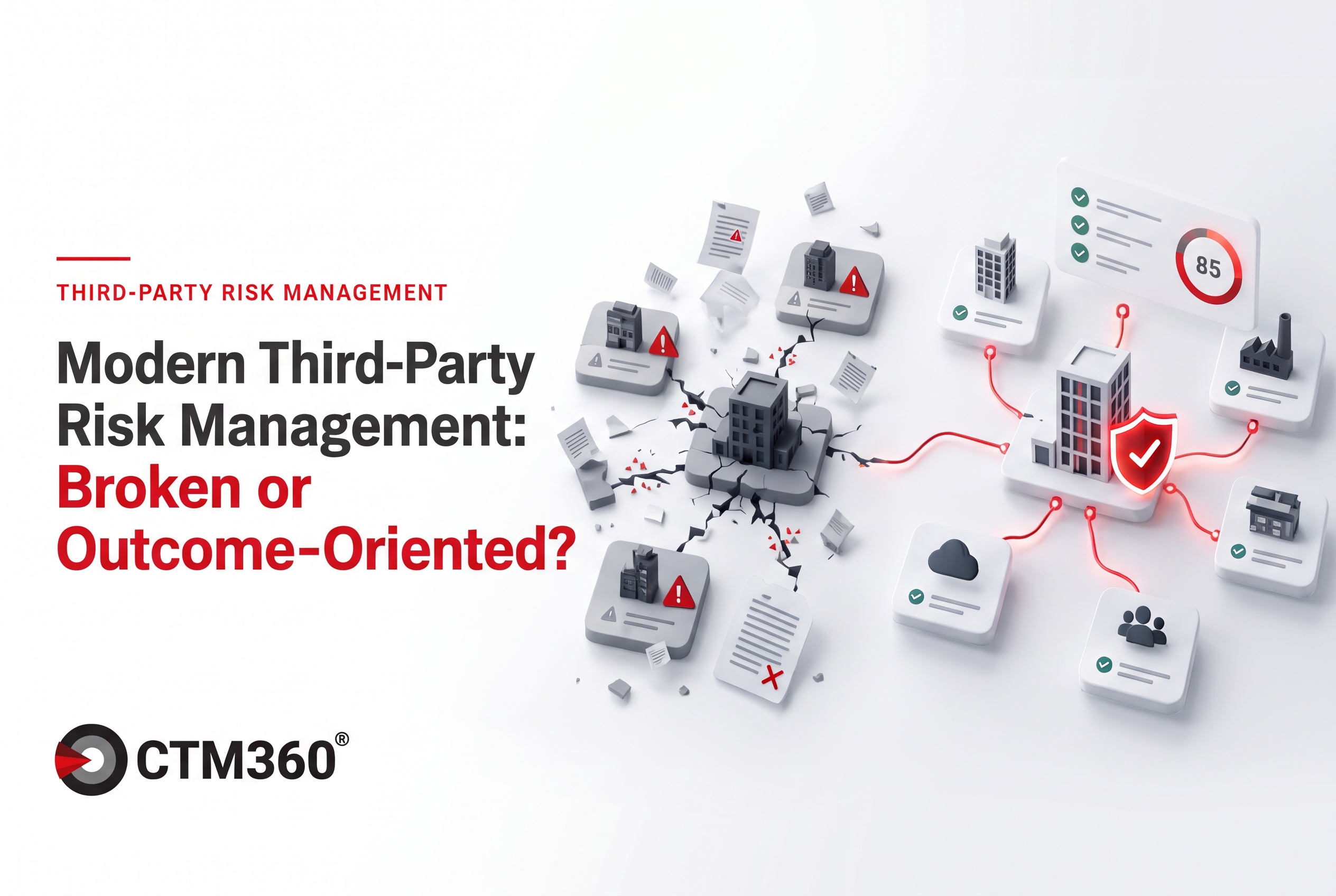
Third-party risk management examines whether suppliers and partners create exposure across the wider business ecosystem.
RiskHub combines external monitoring with vendor assessments and compliance workflows. It provides visibility into third-party attack surfaces, vulnerabilities, breaches and threat-actor claims.
DRP adds another dimension: active abuse involving a supplier’s infrastructure, identity or customer-facing services. For example, a phishing page may be hosted on a compromised server belonging to a known vendor. Where that relationship is already identified, the finding can reach the appropriate security or Governance, Risk and Compliance (GRC) team with useful supplier context attached.
This reduces the manual work required to establish who owns the relationship and begin the supplier conversation.
Consolidated data does not remove the need for ownership
A shared platform can connect findings, but it cannot decide who is accountable for every response.
A common operating model assigns DRP and threat intelligence to the security team, attack surface remediation and patching to IT, and third-party risk to GRC or procurement. Brand, legal, identity and fraud teams may also need to act depending on the incident.
Because one case can involve several functions, routing rules should be agreed before an incident occurs. A consolidated view without defined ownership simply moves the bottleneck: several teams can see the same finding while each assumes another team is handling it.
Every material finding should therefore have:
- A named owner
- A defined escalation path
- A required action
- A target response time
- A record of its current status
Consolidation is most effective when shared data is matched by a shared operating model.
Managed Takedowns closes the response gap
Detection is only the beginning of a DRP case. Removing fraudulent content can require evidence collection, abuse reporting and repeated communication with registrars, hosting providers, social networks and app stores.
CTM360 provides this through Managed Takedowns. The service automates evidence collection, reporting and follow-up through more than 200 integrations globally, with cases overseen by CTM360’s Cyber Incident Response Team (CIRT).
CTM360 reports that 98% of phishing sites are removed within 24 hours and 90% of executive-impersonation cases within 48 hours. These percentages refer to different incident categories and should remain separate. External platforms and infrastructure providers also control part of the removal timeline, so some cases take longer.
The operational benefit is that customer teams do not have to assemble and file every abuse report themselves. They retain visibility while CTM360 manages the takedown workflow.
From separate findings to a coordinated response
DRP is valuable on its own, but its usefulness increases when it shares context with attack surface management, exposure validation, threat intelligence and third-party risk.
The result should not simply be a larger collection of security data. It should be a clearer progression from a legitimate asset, to an exposure, to an emerging warning, to an active threat and finally to a managed response.
Request a CTM360 demo to see how external assets, digital threats, third-party risks and takedown workflows can be brought together on a consolidated platform.
FAQs
What is Digital Risk Protection?
Digital Risk Protection identifies and helps address external threats targeting an organisation’s brand, executives, customers and data on infrastructure it does not control. These threats include phishing, lookalike domains, impersonation, rogue applications and leaked credentials.
Why should DRP and attack surface management share data?
Attack surface management establishes a baseline of legitimate external assets. DRP uses that context to assess lookalike domains, copied websites and other potential impersonation. DRP investigations may also uncover unrecognised assets that require review by IT.
How does DRP make threat intelligence more actionable?
Threat intelligence describes global adversaries, campaigns and techniques. DRP adds organisation-specific evidence, such as a phishing site targeting the brand or exposed credentials associated with its employees. Combining the two helps teams decide whether a broader threat is relevant to them.
How does DRP support third-party risk management?
DRP may detect active abuse involving a supplier’s infrastructure or identity. When the supplier relationship is already known, the finding can be connected to the appropriate vendor profile and routed to security, GRC or procurement for investigation.
Who should own findings in a consolidated security platform?
Ownership depends on the type of finding. Security commonly owns DRP and threat intelligence, IT manages attack surface remediation, and GRC or procurement handles supplier risk. Defined routing and escalation rules are still required when a case crosses several teams.
How does CTM360 manage the removal of malicious content?
CTM360’s Managed Takedowns automates evidence collection, abuse reporting and follow-up through more than 200 integrations. Its Cyber Incident Response Team oversees cases and coordinates the removal process with the relevant providers.