.svg)
.svg)
.svg)


.svg)
.svg)


.svg)

.svg)
.svg)


.svg)


.svg)


What are Indicators of Attack (IoA)? IoA vs IoC Explained

What’s on this page
What are Indicators of Attack (IoAs)?
An Indicator of Attack (IoA) is a security signal that identifies suspicious behavior or activity associated with an ongoing or attempted cyberattack. IoAs enable organizations to identify early signals of malicious activity, understand attacker behavior, and take action before significant impact occurs.
Therefore, security teams, instead of asking:
"Has our organization already been compromised?"
Now increasingly pay attention to,
"Are we seeing signs that an attacker is attempting to compromise us?"
This enables them to preemptively address cyber threats before they cause any significant impact on the organization.
This is where Indicators of Attack (IoAs) become important.
Indicators of Attack vs Indicators of Compromise
(IoAs vs IoCs)
Indicators of Compromise (IoCs)
For many years, security teams have relied on Indicators of Compromise (IoCs) to identify signs that a system or network has already been breached. IoCs include artifacts such as malicious IP addresses, domains, file hashes, or suspicious files that provide evidence of compromise.
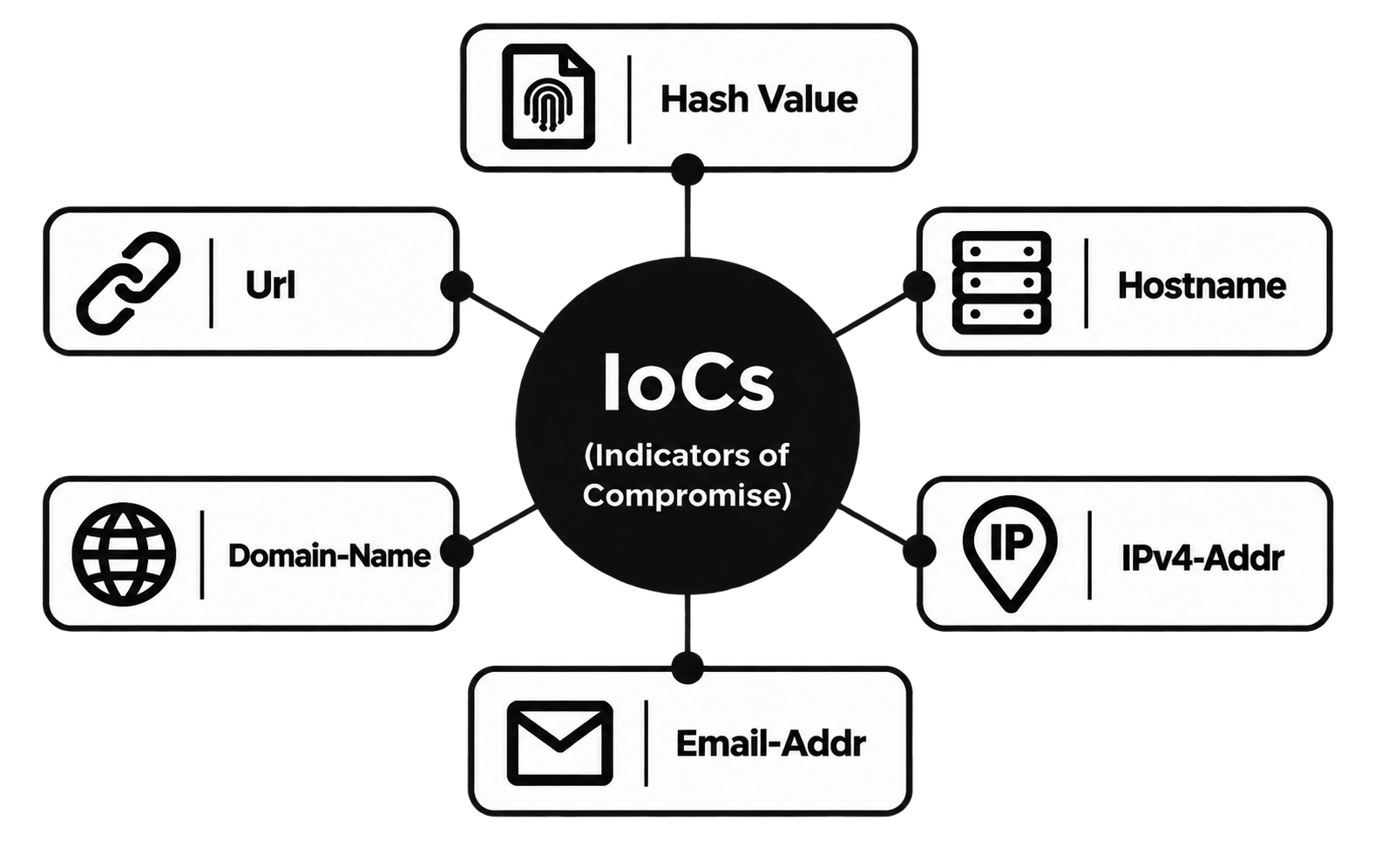
However, IoC security is largely reactive. By the time an IoC is identified, an attacker may already have gained access and begun executing their objectives.
Indicators of Attack (IoAs)
Indicators of Attack (IoAs) identify active malicious activity specifically targeting an organization. These are threats that are now being actively used, such as a lookalike domain becoming a phishing website, malicious infrastructure going live, brand or social media impersonation, rogue mobile applications, or targeted phishing campaigns. By identifying these threats early, organizations can take action to disrupt attacks before they lead to compromise.
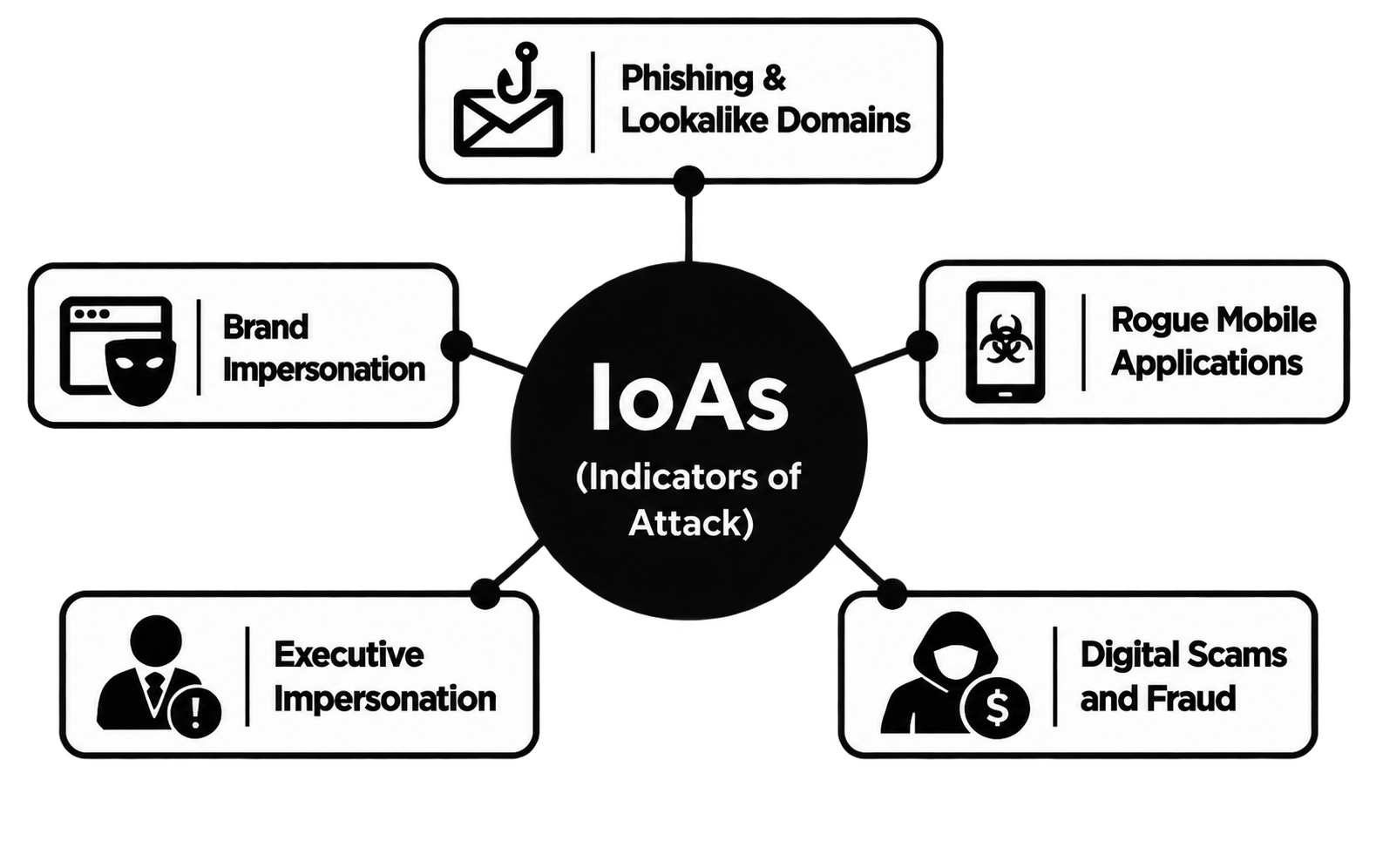
- Phishing & Lookalike Domains: Active spoofing infrastructure used to target employees or customers, including evasive phishing sites designed to avoid conventional detection.
- Brand Impersonation: Live websites, profiles, or digital content that imitate an organization’s brand or identity to facilitate fraud.
- Rogue Mobile Applications: Fake or modified applications distributed through official or third-party app stores while impersonating the organization.
- Executive Impersonation: Fake profiles, baiting news sites, social media accounts, or other digital channels used to impersonate executives and facilitate fraud, phishing, or targeted attacks.
Indicators of Attack (IoAs) take a more preemptive approach by focusing on attacker behaviors and activities observed during the early stages of an attack.
Why are IoCs no longer sufficient for today’s threat intelligence?
While IoCs remain an important part of today’s threat intelligence, they are not sufficient on their own; IoAs are becoming an increasingly important component.
David Bianco also highlights the limitations of IoCs in his conceptual framework, ‘’the Pyramid of Pain’’. According to the concept, hash values, IP addresses, and domain names remain useful, but they are at the lower levels of the pyramid because threat actors can easily change or replace them. Threat actors are highly adaptive and understand that security teams heavily rely on known IoCs. As a result, they continuously modify the infrastructure, which leads security teams towards noise.
From a technical accuracy perspective, IoCs are still valuable; However, IoCs alone are no longer sufficient for next-generation cyber threat intelligence.
Indicators of Attack and Preemptive Cybersecurity
The underlying concept of Indicators of Attack (IoAs) aligns closely with the principles of preemptive cybersecurity.
Traditional cybersecurity approaches often focus on detecting and responding after suspicious activity or compromise has occurred. However, preemptive cybersecurity aims to identify potential threats earlier by understanding attacker intent, behavior, and techniques before they can cause damage.
IoAs support this approach by providing visibility and allowing security teams to:
- Detect threats earlier
- Prioritize meaningful risks
- Take action before the attacker’s objectives are achieved
By moving beyond known indicators and focusing on attacker behavior, organizations can shift from a reactive security approach toward a more preemptive and resilient defense strategy. Therefore, IoAs provide significant value by enabling organizations to identify attacks as they unfold, rather than waiting for evidence of compromise.
Key Takeaways:
Understanding IoAs and IOCs in cybersecurity is essential to building a more effective threat intelligence strategy. Indicators of Attack (IoAs) represent an important shift in next-gen threat intelligence, helping organizations move beyond simply identifying evidence of compromise to recognizing attacks as they develop. While IoCs remain valuable, combining them with IoAs provides earlier visibility into attacker activity and enables security teams to disrupt threats early in the attack lifecycle. This makes indicators of Attack (IoAs) a key component of next-generation Cyber threat intelligence and preemptive cybersecurity.
With CTM360, organizations can identify their Indicators of Exposure, Warning, and Attack and take action before threats escalate into security incidents. Discover how CTM360 helps organizations move from reactive threat intelligence to preemptive cybersecurity.
FAQs
What is the difference between Indicators of Attack (IoAs) and Indicators of Compromise (IoCs)?
The main difference is the stage of the attack lifecycle they identify.
Indicators of Compromise (IoCs) provide evidence that a security incident has already happened, such as malicious IP addresses, file hashes, or compromised domains.
Indicators of Attack (IoAs) focus on identifying active attack activities and attacker behavior before compromise occurs, allowing organizations to take action earlier.
Why are Indicators of Attack important in cybersecurity?
IoAs help organizations move from reactive detection to a more preemptive security approach. By identifying active threats such as phishing campaigns, brand impersonation, rogue applications, and malicious infrastructure, security teams can disrupt attacks before they result in compromise.